Commercial Exit Door Push Bar Installation and Repair in Tucson
Push bar hardware, also called panic bars or crash bars, serves a specific function in commercial buildings: it allows occupants to exit quickly during an emergency without needing to turn a knob or operate a latch. In Tucson, where commercial code compliance is enforced by the city and Pima County, having properly installed and functioning exit hardware matters both for safety and legal liability. CallOrange Locksmith of Tucson installs, services, and repairs push bar hardware on commercial doors across the Tucson metro area, with technicians available seven days a week.
What Push Bar Hardware Does and Why It Matters
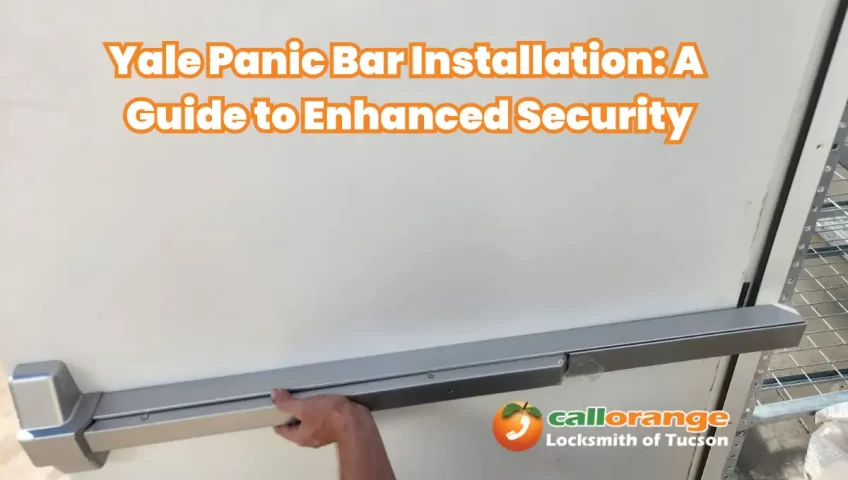
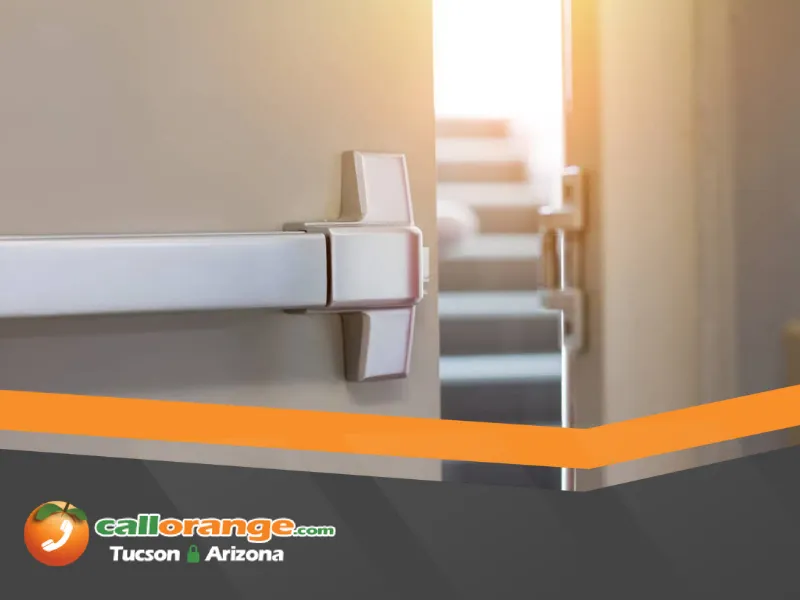
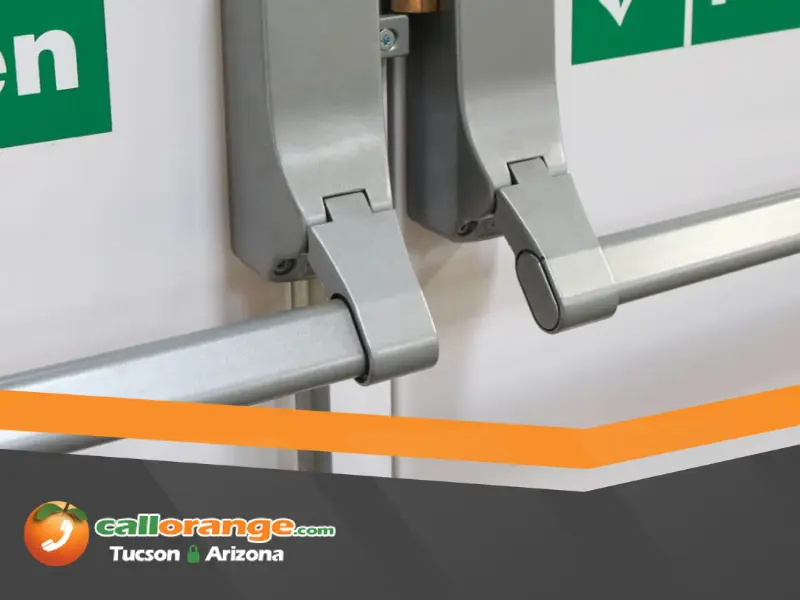
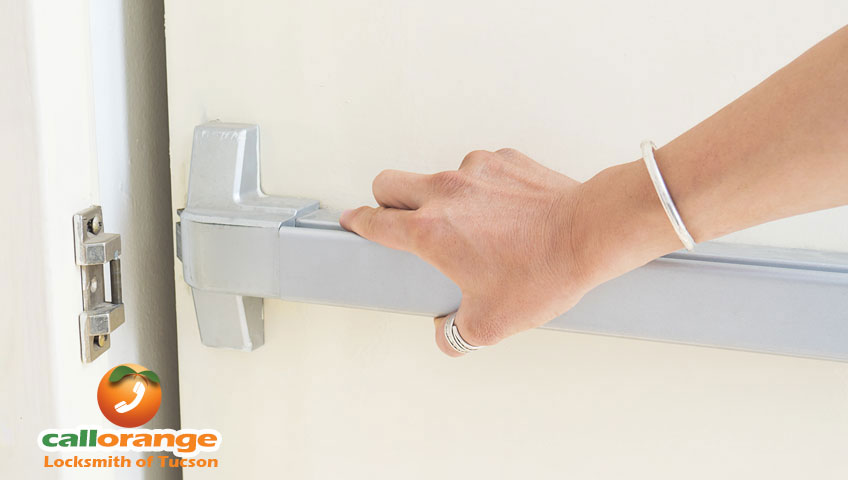
A push bar, also called a panic exit device, mounts horizontally across the interior face of an exit door. When someone applies pressure to the bar, the door latch retracts and the door opens outward. This design allows a person to exit under stress without any fine motor skill or coordination, which makes it a requirement under most commercial building codes, including the International Fire Code (IFC) adopted in Arizona.
Buildings that require panic exit hardware typically include:
- Assembly occupancies such as churches, theaters, and event venues
- Educational facilities including schools and training centers
- High-occupancy retail spaces exceeding specific square footage thresholds
- Office buildings with more than 50 occupants on a floor
- Any egress door in a space classified as a place of public assembly
If your business falls into one of these categories and your exit hardware is worn, damaged, or missing, a licensed commercial locksmith can bring the door back into compliance before a fire marshal inspection or a liability claim becomes an issue.
Common Push Bar Problems That Require Repair
Push bars see heavy use in commercial settings. A retail store, warehouse, or office building may have employees and customers cycling through the same exit door dozens of times per day. That volume of use creates wear on specific components, and most failures are predictable.
| Problem | Typical Cause | Common Repair Scope |
|---|---|---|
| Latch failure | Worn latch bolt or spring mechanism | Latch assembly replacement |
| Misaligned strike plate | Frame settling or hinge wear | Strike plate adjustment or relocation |
| Broken or seized pivot rods | Corrosion or metal fatigue | Internal rod replacement |
| Worn touch pads | Years of repeated contact pressure | Touch pad or full bar replacement |
| Damaged rim cylinders | Key wear or cylinder corrosion | Cylinder rekey or replacement |
| Door closer interference | Failing closer applying uneven pressure | Closer adjustment or replacement |
The most frequent issues our technicians see on Tucson commercial properties include:
- Latch failure: The latch bolt no longer retracts fully or springs back improperly, causing the door to remain unlatched or require force to open.
- Misaligned strike plate: The latch and strike plate fall out of alignment due to door frame settling or hinge wear, preventing proper latching.
- Broken or seized pivot rods: The internal rods that connect the push bar to the latch mechanism corrode or break, making the bar unresponsive.
- Worn touch pads: The horizontal bar itself develops play or looseness from years of contact, reducing force transfer to the latch mechanism.
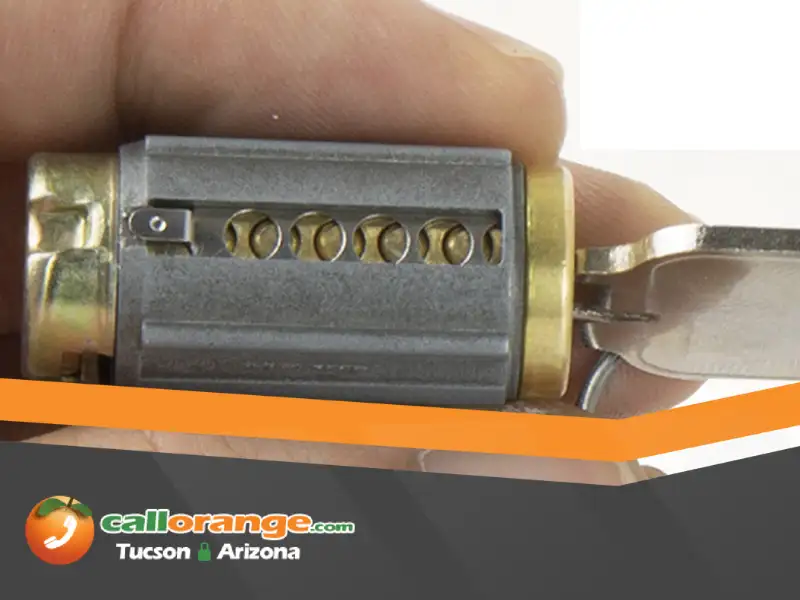
- Damaged rim cylinders: On devices with keyed entry from the exterior, the cylinder wears down and can no longer accept the key or rotate properly.
- Door closer interference: A failing door closer applies uneven pressure against the door, which stresses the push bar mechanism over time.
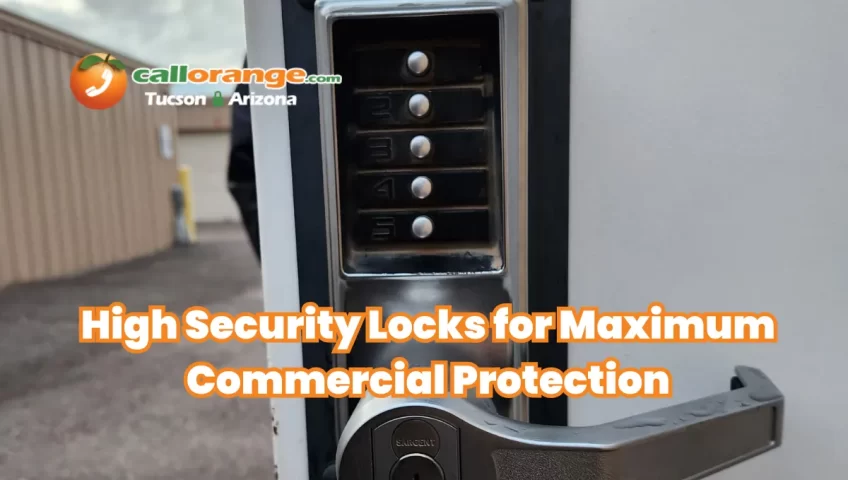
Many of these repairs can be completed on-site in a single visit. Our technicians carry replacement parts for the most common commercial hardware brands, high security locks, including Von Duprin, Sargent, Falcon, and Dorma.
How We Approach Push Bar Installation on Commercial Doors
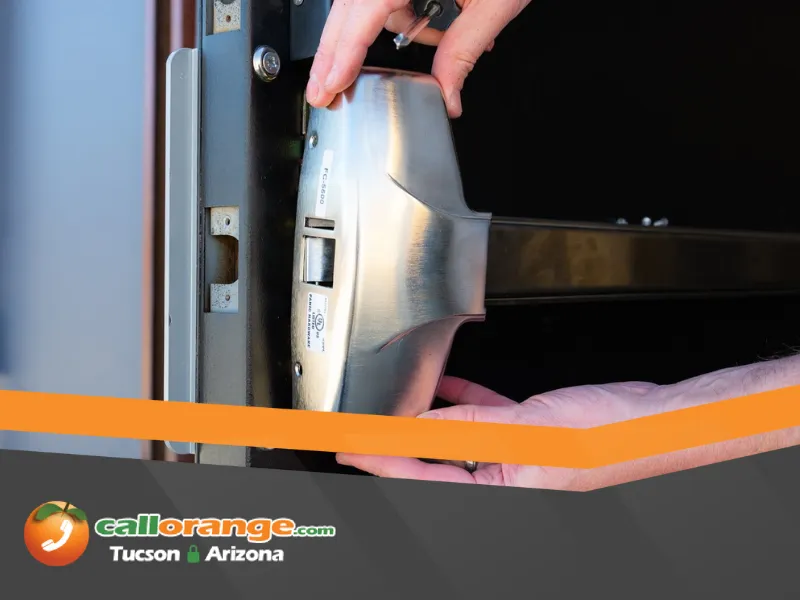
Installing a push bar device on a commercial exit door involves more than mounting hardware to a surface. A proper installation accounts for door material, door thickness, frame condition, fire rating requirements, and the type of latch mechanism the space calls for.
Our installation process follows these steps:
- Site assessment: We inspect the door, frame, hinge condition, and existing hardware before selecting the correct device model.
- Code review: We confirm which exit device type (rim, mortise, or surface vertical rod) fits the door configuration and local code requirements.
- Hardware selection: We recommend and supply hardware suited to the door’s fire rating, traffic volume, and finish specifications.
- Precision mounting: We drill, template, and mount the device to manufacturer tolerances, then align the strike plate to ensure clean latching.
- Function testing: We test the door through multiple open and close cycles, verify the latch engages fully, and confirm the exterior cylinder (if applicable) operates correctly.
We also coordinate with property managers who need documentation of the work for their records or for a pending inspection.
Repair vs. Replacement: How to Know Which Option Fits Your Situation
Older push bar hardware can sometimes be repaired rather than replaced, which keeps costs lower for the business owner. In other cases, replacement makes more sense because repair parts are no longer manufactured or because the device has degraded past the point where a single repair holds long-term.
Repair works well when the failure involves a specific component, such as a latch, rod, or cylinder, and the overall device body remains structurally sound. Replacement becomes the better option when the device is more than 15 to 20 years old, when multiple components have failed together, or when the current hardware does not meet updated fire code standards.
Our technicians will give you a direct assessment at the time of service, with pricing for both options so you can make an informed decision.
Serving Tucson Businesses with Licensed Commercial Locksmith Service
CallOrange Locksmith of Tucson holds the licensing and insurance required to work on commercial properties in Arizona. Our technicians arrive in marked vehicles, carry professional-grade tools, and bring commonly needed parts on every service call to reduce wait time and return visits.
We serve businesses throughout Tucson and the surrounding areas, including the downtown corridor, Midtown, Foothills, Marana, Oro Valley, and Sahuarita. Our Google rating stands at 4.9 stars across 689 reviews, and we back every commercial job with clear communication from the initial call through project completion.
Schedule Push Bar Service for Your Tucson Business Today
A faulty or missing push bar on a commercial exit door creates safety risk and potential code violations. CallOrange Locksmith of Tucson provides installation and repair service for commercial panic exit devices across all property types in the Tucson area.
Frequently Asked Questions
How much does push bar installation or repair typically cost for a commercial door in Tucson?
Costs vary depending on the hardware brand, door type, and whether the job requires new installation or a repair to existing components. A basic repair such as a latch adjustment or strike plate realignment generally runs less than a full device replacement. CallOrange Locksmith of Tucson provides on-site assessments so you receive a firm quote before any work begins.
Can a push bar be installed on a door that currently has a standard knob or lever handle?
Yes, most commercial doors can be converted from standard handle hardware to a panic exit device, provided the door thickness and frame condition meet the manufacturer’s specifications. The existing hardware is removed and the new push bar is fitted using the appropriate mounting brackets for your door material and thickness. A licensed locksmith will confirm whether any frame reinforcement is needed before installation.
Do push bars work with electronic access control systems?
Many push bar devices are available with electric latch retraction or electromagnetic locking options, which integrate with card readers, keypads, or building access control panels. The exit function always remains available from the inside to satisfy fire code requirements, while access from the exterior is controlled electronically. A commercial locksmith can specify the correct electrified panic hardware for your existing access control setup.
How often should push bar hardware be inspected or serviced on a commercial property?
Most fire codes and hardware manufacturers recommend at least an annual inspection of panic exit devices, though high-traffic doors may benefit from a check every six months. During a service visit, a technician tests latch retraction force, checks rod and pivot alignment, and lubricates moving parts. Catching minor wear early prevents the kind of failure that can result in a door that will not latch or cannot be opened during an emergency.
Is a permit required to install or replace push bar hardware on a commercial door in Tucson?
Permit requirements depend on the scope of work and how the City of Tucson or Pima County classifies the project. Hardware replacement on an existing door in kind generally does not require a separate permit, but new installation as part of a tenant improvement or change of occupancy may trigger a review. Consulting with a licensed commercial locksmith before the project starts helps clarify what documentation or inspections apply to your specific situation.
Call us at (520) 542-2797 or visit https://callorange-tucson-az.com to schedule a service call or request an on-site quote. Our team responds promptly and can often reach your location the same day you call.