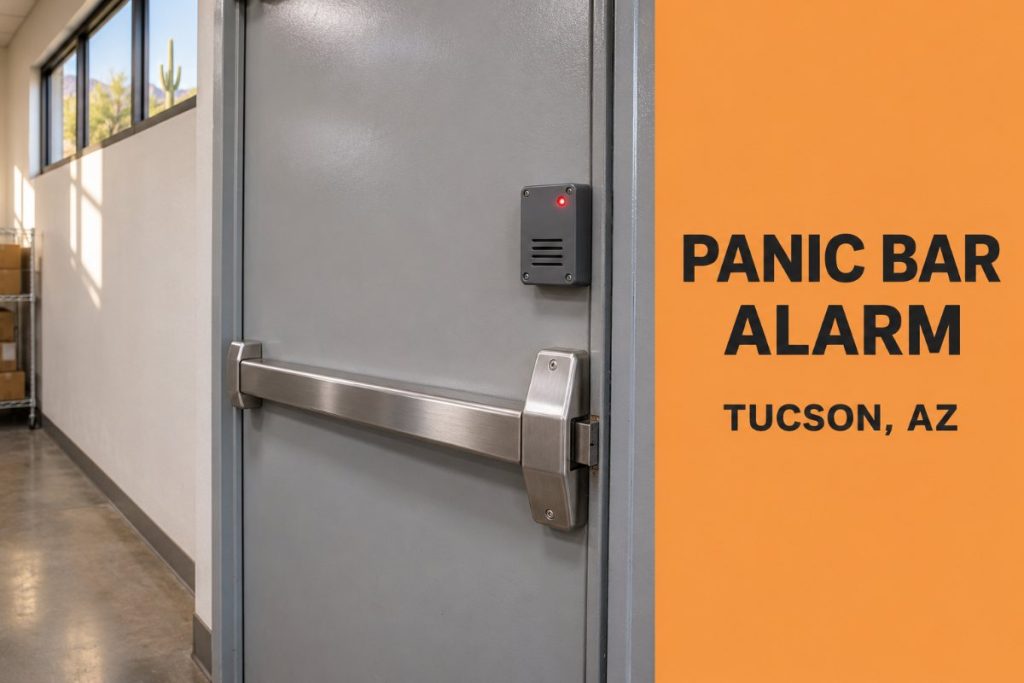
Quick answer: A panic bar alarm sounds when someone pushes an exit door, which stops back-door theft and keeps staff from propping doors open. CallOrange installs, repairs and adjusts exit alarms and panic hardware for Tucson businesses. Call (520) 542-2797.
Back doors are where a lot of business losses happen: stock walked out to a waiting car, a door propped open for a smoke break, or a side exit used as a shortcut. A panic bar alarm solves that without breaking fire code. The door still opens instantly from inside, but anyone who uses it sets off a loud alarm. This guide explains how a panic bar alarm works, what the rules say, six tips for choosing and maintaining one, and how to stop false alarms.
CallOrange Locksmith of Tucson services exit doors for restaurants, retail shops, offices, clinics and warehouses across East Tucson and the rest of the city.
How a Panic Bar Alarm Works
There are two common setups. The first is an alarmed exit device: the push bar itself contains a battery-powered alarm that sounds when the bar is pressed. The second is a separate exit alarm mounted on the door or frame, paired with an existing panic bar. Both are armed and disarmed with a key on the outside or on the device. When armed, pushing the bar opens the door and triggers a horn of around 100 decibels until someone resets it with the key.
Because the door still opens in one motion, a panic bar alarm adds control without trapping anyone inside. That is why it is a common choice for rear doors that must remain exits.
6 Essential Tips for a Panic Bar Alarm
1. Keep the exit free at all times
Never add chains, padlocks or slide bolts to an exit door, even with a panic bar alarm installed. The alarm is there to deter misuse, not to lock the door.
2. Choose the right type for the door
Rim devices fit most single doors. Vertical rod devices suit pairs of doors. If your existing bar is in good shape, a separate alarm unit may be all you need; if the bar is worn, an alarmed device replaces both at once.
3. Decide who holds the reset key
Only managers should be able to disarm and reset the alarm. If every employee has the key, the alarm gets turned off and stays off. A master key system can give managers that key without adding another loose key to the ring.
4. Test it every month
Push the bar once a month with the alarm armed. A weak horn means the battery is fading. Many units use a 9-volt battery that should be replaced at least yearly.
5. Fix the door before blaming the alarm
Most false alarms come from a door that does not latch fully. Wind, a weak closer or a misaligned strike lets the door drift open and triggers the panic bar alarm. Adjusting the closer and strike usually stops it.
6. Add signage
“Emergency exit only, alarm will sound” signs prevent most misuse before it happens. Combined with an audible alarm, they cut back-door traffic sharply.
Need a panic bar alarm installed or fixed?
Tell us the door type and what is happening. We quote the work before we come out.
Panic Bar Alarm Options at a Glance
| Option | Best for | Notes |
|---|---|---|
| Alarmed exit device | New install or worn bar | Bar and alarm in one unit |
| Add-on exit alarm | Good existing panic bar | Mounts on door or frame |
| Delayed egress | Approved locations only | Requires code approval |
| Door position alarm | Doors without panic bars | Sounds when door opens |
Code Basics in Plain Language
Exit doors must open from the egress side without a key, special knowledge or effort. A panic bar alarm meets that rule because the door still opens immediately. Delayed egress devices, which hold the door for a short time, are only allowed in certain occupancies and must be approved by the local fire authority. When in doubt, check with the City of Tucson fire marshal or your building’s inspector. For general background, the OSHA exit route guidance explains why exits must stay unobstructed.
What Not to Do
- Do not lock the exit with anything else. That turns a safety device into a hazard.
- Do not disconnect the alarm because of false alarms. Fix the door instead.
- Do not install a delayed egress device without approval. It may violate code.
- Do not ignore a weak horn. A dying battery means the alarm may not sound when it matters.
Tucson Conditions That Affect Exit Alarms
Monsoon winds pull on rear doors and can trigger alarms if the closer is weak. Summer heat expands metal doors and frames, so a strike that lined up in January may bind in July. Dust gets into latch mechanisms and slows them down. We check the closer, the strike and the latch on every panic bar alarm service call so the door closes and latches reliably in every season.
Our articles on commercial exit door push bar repair and Yale panic bar installation cover the hardware side in more detail, and our panic bar door repair service handles the full job.
What Happens During a Service Visit
We inspect the door, the closer, the hinges and the existing hardware first. Then we recommend either an add-on alarm or an alarmed device, install it, set the alarm, and walk your manager through arming, disarming and resetting it. Before we leave, we open and close the door several times to make sure it latches every time and does not cause false alarms. Work can be scheduled before opening or after closing so customers are not disturbed.
Which Businesses Benefit Most
- Restaurants and bars. Kitchen back doors are often propped open for deliveries and breaks, which invites theft and lets heat and dust in.
- Retail stores. Rear exits near stockrooms are the easiest route for merchandise to leave without being paid for.
- Clinics and offices. Side exits near records or medication rooms need to stay closed when not in use.
- Warehouses and shops. Large buildings with several exits benefit from knowing exactly which door was opened and when.
- Schools, churches and community centers. Exit doors must stay usable for emergencies while discouraging people from entering through them.
In each case the goal is the same: keep exits fully usable in an emergency while making casual use noticeable. That balance is exactly what an exit alarm on a push bar provides.
Signs Your Exit Hardware Needs Attention
Even the best alarm cannot work on a door that does not close properly. Watch for these warning signs. The door slams or bounces instead of closing gently, which points to a closer out of adjustment. The bar feels gritty or needs extra force to push, which usually means a dirty or worn latch. The door rattles in its frame when closed, a sign that the strike has shifted. Staff complain that the alarm goes off when nobody touched the door. Any of these is worth a service call before the next busy weekend.
We also see many exit devices that were installed years ago and never maintained. A yearly inspection of the closer, hinges, latch and alarm battery costs far less than replacing a device that wore out early, and it keeps the door ready for inspections.
Arming and Resetting: A Quick Guide for Managers
Most units use the same routine. Insert the key, turn it to arm, and the alarm is active. When the bar is pushed and the horn sounds, insert the key and turn it to reset, then turn it back to arm. Some devices have a test button and a low-battery chirp. Post a short card with these steps near the office so whoever closes the store knows how to reset the alarm.
Where We Install a Panic Bar Alarm
We serve businesses across Tucson from 2201 N Camino Principal, Suite #109, including East Tucson, Midtown, the Catalina Foothills, Tanque Verde and the University Area. We are open daily from 6 AM to 11 PM.
Frequently Asked Questions About a Panic Bar Alarm
What is a panic bar alarm?
An alarm that sounds when someone pushes an exit door bar, while still letting the door open instantly.
Is a panic bar alarm legal on fire exits?
Yes. The door still opens from inside without a key, which meets the basic egress rule.
Can you add an alarm to my existing panic bar?
Yes. If the bar is in good shape, an add-on exit alarm is usually enough.
Why does my alarm go off by itself?
Usually the door is not latching fully. We adjust the closer and strike to stop false alarms.
How loud is it?
Most units sound at around 100 decibels until reset with a key.
What battery does it use?
Many use a 9-volt battery. Replace it at least once a year.
Who should have the reset key?
Only managers, so the alarm stays armed.
Do you work after business hours?
Yes. We schedule installs before opening or after closing.
How much does a panic bar alarm cost?
It depends on the door and the device. Call (520) 542-2797 and we quote it before any work.
What hours are you open?
Every day from 6 AM to 11 PM in Tucson.